Chronic Illness and Loneliness
My Story and What I’ve Learned
I want to talk about something that took me a long time to admit, even to myself: chronic illness can make you feel lonely even when you’re surrounded by people who love you.
It wasn’t something that hit me overnight. With fibromyalgia and chronic fatigue syndrome, it crept in slowly, one small thing at a time.
First it was cancelling plans because I was too wiped out to follow through. Then it was leaving events early when the pain got too much, or saying no to invitations because I already knew, deep down, my body wasn’t going to cooperate. Things I used to do without a second thought — long walks, busy days out, family get-togethers — started to feel like mountains I couldn’t climb.
Everyone else’s lives carried on as normal. Mine slowed right down.
I remember watching family and friends head off on long walks while I stayed behind, knowing I just couldn’t manage it anymore. Nobody was unkind about it. Nobody complained. But it still stung. People made allowances for me constantly, and even when it came from a place of love, I couldn’t shake the guilt that came with it.
The one moment that stuck with me was a family trip to Paris, arranged by one of our boys as a birthday present for my wife. I knew it would mean hours of walking, long packed days, constant movement. I knew before I’d even properly thought it through that I wouldn’t keep up. So I stayed home and waved them off instead.
That was the moment it really sank in — just how much my world had changed.
Even the small things started to drain me. A meal out, a long chat with a friend — both could leave me completely empty by the time I got home, needing hours just to recover. There’s a particular kind of grief in that. Not the dramatic, obvious kind — just a quiet sadness that settles in when you realise things you once took for granted have become genuinely difficult.
So I started pulling back. Not because I wanted to be alone, but because explaining myself, over and over, became its own kind of exhausting.
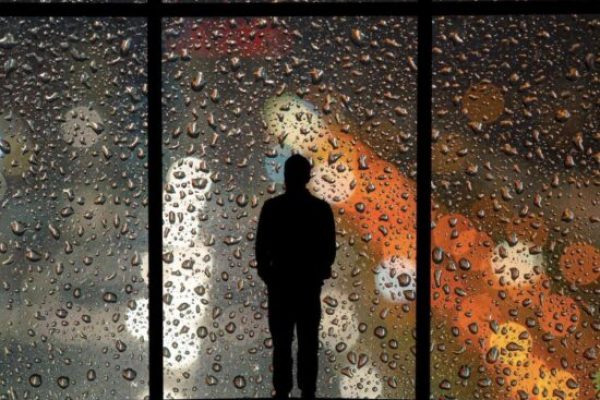
The invisible wall between you and everyone else
One of the strange things about an invisible illness like fibromyalgia is that from the outside, you can look absolutely fine. And that creates a kind of invisible wall between you and the people around you.
People don’t always see the cost of things. They don’t see what you went through to get dressed and show up. They don’t see what you’re holding together just to have a normal-looking conversation. They see you at your best — that one hour you managed to get through — and they don’t see the two days of payback that followed.
That gap between how you look and how you actually feel can make the loneliness even harder to explain. And after a while, you stop trying.
One of the hardest parts of this illness is the constant fear of sounding negative, or talking “too much” about being unwell. I got into the habit of staying quiet about how bad things really were. But silence creates its own problems — people don’t always understand why you’ve cancelled plans again, gone quiet on social media, or stopped feeling like the person they used to know.
And then there’s the guilt. It shows up everywhere.
Guilt for needing help. Guilt for not working. Guilt for missing out. Guilt for losing hobbies I used to love. Guilt, sometimes, for even being ill in the first place — which sounds ridiculous when I say it out loud, but I know I’m not the only one who’s been there.
What made the guilt worse was the sense that I’d somehow become a smaller version of myself. I used to be someone who made plans, followed through, showed up. Now I was the person who cancelled, who disappeared, who couldn’t commit to anything because I genuinely didn’t know how I’d feel from one day to the next.
Fibromyalgia hasn’t just changed my health — it’s reshaped my identity, my confidence, my routines, and the way I relate to the world around me. And grieving that version of yourself — the person you used to be — is something that doesn’t get talked about nearly enough.
But here’s what you need to know
Loneliness is an incredibly common part of living with chronic illness. It doesn’t mean you’re doing something wrong, and it doesn’t mean you’re alone in feeling it.
Opening up to people you trust genuinely helps, more than you’d expect. Even just saying “I’m struggling” out loud can lift some of the weight you’ve been carrying quietly. I know how hard that first conversation can feel — especially when you’ve spent so long trying to keep things together and not make a fuss. But there’s real relief in letting someone in, even just a little.
Support groups have made a real difference for me too. There’s something powerful about being around people who simply get it — no explaining required, no apologising for how you feel. Whether that’s an online community, a local meet-up, or a condition-specific group, it reminds you this battle isn’t yours to fight alone.
If you’re in the UK, Fibromyalgia Action UK is a brilliant starting point — they offer support, information, and details of groups across the country. If you’re near Cardiff, EPP Cymru runs courses for people living with long-term health conditions, where you’ll meet others walking a similar path. Sometimes all it takes is one person saying “I feel that too” to shift everything.
Chronic illness can shrink your world. But connection is still possible, even on the hardest days. And it doesn’t have to be a grand gesture — sometimes it’s just one honest conversation, one supportive comment on a post, one person reading something like this and feeling a little less like they’re the only one going through it.
So if you’re reading this feeling isolated because of illness, hear me when I say:
You are not weak. You are not failing. And you are not alone.
Have You Experienced This Too?
Living with chronic illness can feel incredibly isolating, but sharing experiences can help others feel understood and less alone.
Have you struggled with loneliness since becoming unwell?
What has helped you cope?
Leave a comment below — your story might help someone else more than you realise.